I did not seek safety because bombs were falling or tanks were rolling.
I left before things became serious. Before headlines shouted louder than common sense, before “justice” could be spoken only in the same breath as “narrative” and “reason of state”.
Anyone who doubts this need only look at the newspapers. In one case, a man attacks an American tourist who shows civic courage. The attacker is arrested, released, and later arrested again. The victim is no longer the centre of attention; the discussion turns instead to whether the grounds for detention were formulated correctly.
At the same time, a pianist in Berlin ends up in pre-trial detention after provoking a lay judge in court. No knife, no blood, only a scene, yet the full weight of the justice system falls on him.
The legal language sounds dry. In ordinary language it can look as though a person’s own defence is being turned into an offence. Whoever contradicts the official version risks punishment not only for the alleged act, but also for contradicting it. A right of defence begins to resemble a trap.
Anyone who looks further back in history encounters Roland Freisler, president of the Nazi People’s Court. There, judgment was no longer even a question; it was theatre with lethal consequences. After 1945, many colleagues of that machinery escaped almost untouched. Had he survived, perhaps he too would have found a way to “dispense justice” again.
The cases differ greatly, yet they reveal one thing: law is rarely as simple as a naïve citizen imagines. It is theatre, power and a tool. And depending on who stands before it, it can become a very different tool.
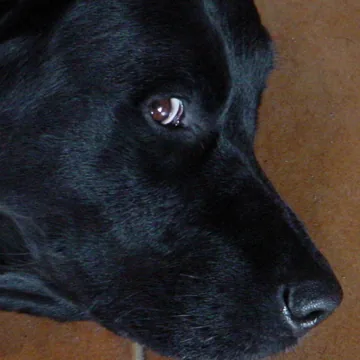
So I went up the mountain. Not to a place of pilgrimage and not to a bunker, simply to my place: olive trees, solar panels and two dogs more honest than most election programmes.
This is not a prescription for everyone. If millions suddenly chose the same path, my mountain would no longer be a mountain but an overcrowded refugee camp with a sea view.
The state tolerates many things, but not easily the idea that someone might live better without depending on it.
I did not save the wider world. I did not save my former country, because I dislike missionary zeal and each person is, to a large extent, the craftsman of his own misery. But I created my own small realm beyond the headlines.
A realm where no one decides every morning which narrative is valid today. Here the rules are simpler: live, work, listen to music, break bread.
Politicians may continue scratching at their microphones and judges decorating their verdicts. My decision has been made.
I did not find the Africa I had once imagined. I found a mountain village that suits me. And up here, the wind is free.