ArcaNuova · Dobermanns · Language
The Language of My Dobermanns – and Who Is Training Whom
Two Dobermanns communicate through tone, gaze and movement, and their owner gradually discovers that training works in both directions.
In the past I was mainly there for other people. My days consisted of helping, deciding and carrying responsibility. I was needed and noticed, and I also found confirmation in that role.
Today that has shifted. Not abruptly and not according to plan, but quietly.
The world has become larger and at the same time simpler. I am beginning to notice again what used to be mere scenery: the landscape, the silence and the rhythms of nature.
I cannot, naturally, compare myself with Alexander von Humboldt, whom I greatly admire. He observed nature in the vast and in the minute, recognising connections where others saw only isolated parts. Yet I believe the entrance is similar. Knowledge does not come first, but seeing. Not theory, but attention.
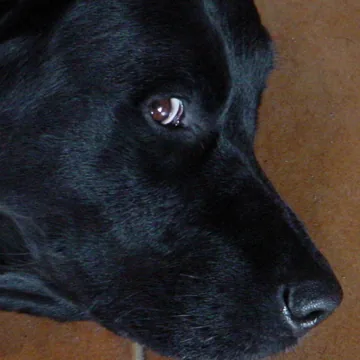
Within this larger context, my dogs have become more than companions. The stage has grown smaller, but more honest. Instead of many people, two Dobermanns now challenge me every day and at the same time keep me grounded.
They do not speak in the conventional sense, yet they have developed a language of their own. No words, no sentences, but a remarkably differentiated play of sounds.
A bright, short whine when impatience rises. A long, almost nasal murmur when they want attention without being demanding. A deep vibrating growl when something feels wrong, or when they are trying to tell me something I have obviously failed to understand.
With time these sounds become more than noise. A kind of melody develops, changing with the situation, and I become better at reading it.
There is no fixed translation. It is a whole made of tone, gaze, movement and context. Surprisingly, my interpretation is correct more and more often.
What once happened through words now happens through attention.
Then comes the part one does not particularly enjoy admitting: I am not only training the dogs. They are training me as well.
A certain sound, a certain nuance, and I react. More often than I would like and faster than I had planned.
They do not stop where they have learned to “press a button”. They vary their sounds, alter pitch, length and intensity, and observe precisely what works on me.
One can almost watch their “language” develop. A sound is repeated when it succeeds. Another is abandoned or adjusted when no response follows. The result is not a fixed vocabulary, but a living system that changes constantly and is tuned to me.
And I, in my human self-importance, continue to imagine that I am the educator.
I have not stopped being noticed. I have merely learned to notice more carefully myself. That contains a new form of freedom: no appointments, no expectations from outside, no role that has to be fulfilled. Instead there is a quiet, clear connection to nature, to the animals and ultimately to myself.
I used to help people. Today I am simply here. Perhaps that is the greater step.
Related thoughts