ArcaNuova · Dogs · Connection

The Silent Dialogue

How two Dobermanns taught me more about connection, trust and clarity than any dog school ever could.

I had dogs for thirty years, but only in recent years did I understand what it means to truly live with them. I used to think obedience came from clear commands and a voice that could become loud when necessary. A dog was supposed to function, like a tool or an engine. Today I know how wrong that was.

Now I live with my two Dobermanns day and night. They sleep in the bed, they are in the house, on the terrace and by the pool. Suddenly a way of living together emerges that has nothing to do with commands and everything to do with relationship.

When I lie in bed at night and say, “Could you please move over a little?”, something happens that I once thought impossible. The dog moves twenty centimetres. Then I ask, “Just a little more?”, and he moves again. No pressure, no sharp tone, no dominance.

The dog is not listening to the command. He is listening to me.

That is the difference between training and connection. It is calm. It is trust. It is clarity.

The same is true at feeding time. In the past there was something like a military routine. Today we almost have a conversation. I speak, they listen, they wait. They know when it is time and when it is not. Not because of fear, but because of closeness.

It is a kind of respect I do not always receive from people, but almost always from dogs. They do not act, pretend or need roles. They are simply there. And they mean it honestly.

I have learned more about relationships from these two Dobermanns than from all seminars, psychologists and former partners combined. Anyone who truly lives with dogs learns a language found in no book. A quiet language that works only when you are inwardly clear.

Further related thoughts
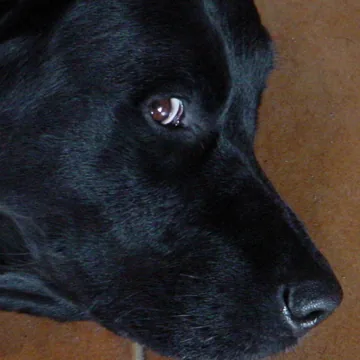
Black dog with a thoughtful look
Who is thinking behind it?

ArcaNuova is not a finished product, but an ark for thoughts that can be taken along, grasped, understood and reused. What stands here should not merely be read. It should trigger something: an impulse, a tool, a beginning.

Behind ArcaNuova are experience, observation and the attempt to think about things clearly and practically. No psychological fog. No empty chatter. Something you can actually get hold of.

Thoughts

The author of ArcaNuova by the sea
Who writes behind it?

His path led from dental technician to dentist and from dentist to philosopher. He carried forward fewer titles than tools: precise observation, careful case history, diagnosis and the willingness to discard an initial assumption when reality does not fit it.

The thoughts do not come from a textbook, but from experience: in a dental practice, a solar installation, a router, an olive harvest or occasionally in the gaze of a dog.

More about the author

Thoughts

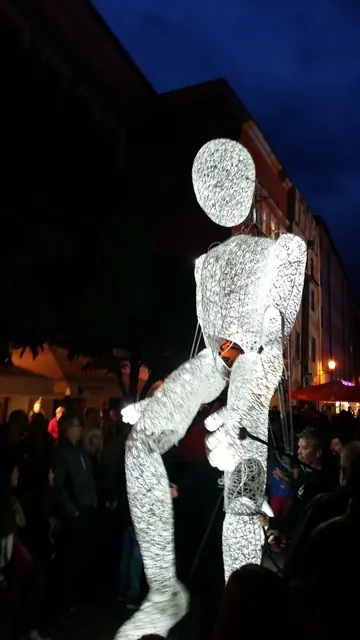
Festival of lights. Humanly conceived, technically illuminated.
How does he write?

As a dentist, I was used to well-trained office staff revising my medical texts. They corrected spelling, smoothed formulations and made complicated sentences readable. Nobody would therefore have credited them with the medical ideas.

Retirement ended not only the practice but also the office. Apparently only a president can take the entire staff into retirement. For linguistic revision I therefore switched to artificial intelligence.

The division of labour remained essentially the same: I provide thoughts, experiences and attitude; AI helps with sentence structure, spelling and polish. The new office assistant simply needs no desk, no holidays and shows a remarkable enthusiasm for syntax.

The birth round of my seal

Thoughts

Breaking wave in the Blue Lagoon
Why does he write?

The author has a pronounced curiosity and a tendency to follow thoughts long after others have changed the subject. Not everyone wants to discuss society, technology, philosophy or life’s absurdities over coffee. That is probably sensible.

In writing, every thought finds the space it needs, and every reader can decide how far to follow it.

Thoughts