ArcaNuova · Achievement · Dignity · Experience

The Quiet Dignity of Real Achievement

Why real achievement needs no wall of certificates and why impact often matters more than visible recognition.

There are times when the world seems louder than ever. People display their awards, post their successes and stage every step as if life were a competition for attention. In such an environment it is easy to forget that real greatness is rarely loud.

Many careers are accompanied by certificates: records of attendance, diplomas and honours of every kind. They document stages, but they rarely tell the truth about a person’s character. What truly matters almost always happens between the lines: in the responsibility one accepts, in the knowledge one passes on and in the way one helps another human being.

Some people need these recognitions visibly on the wall. They give them support, direction or confirmation. That is legitimate. But there are also the quiet masters: people who do not need to exhibit their achievement because they know their worth is not written on paper. They keep their certificates in the cellar, not out of contempt, but from inner freedom. They define themselves not by awards, but by effect.

Those who do not display their successes often carry them more deeply within. They carry the trust of their students, the gratitude of their patients and the calm of experience. These values do not fade when a frame falls from the wall or a certificate turns yellow. They remain because they were lived.

In a world that constantly demands outward signs of importance, it can be liberating to do the opposite consciously. Not to be loud, but clear. Not to make an impression, but to leave one. Perhaps this reminds us that true dignity needs no audience.

And sometimes one small object is enough: a gift, an upright gesture from someone who knows us, representing the core of one’s own story. Such things carry soul. Everything else is decoration.

Related thoughts
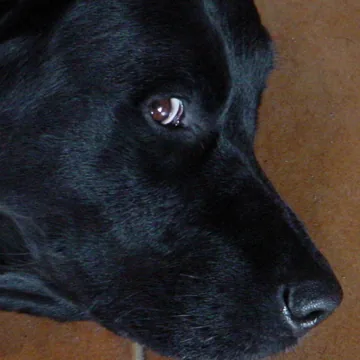
Black dog with a thoughtful look
Who is thinking behind it?

ArcaNuova is not a finished product, but an ark for thoughts that can be taken along, grasped, understood and reused. What stands here should not merely be read. It should trigger something: an impulse, a tool, a beginning.

Behind ArcaNuova are experience, observation and the attempt to think about things clearly and practically. No psychological fog. No empty chatter. Something you can actually get hold of.

Thoughts

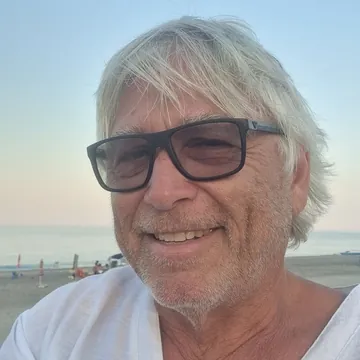
The author of ArcaNuova by the sea
Who writes behind it?

His path led from dental technician to dentist and from dentist to philosopher. He carried forward fewer titles than tools: precise observation, careful case history, diagnosis and the willingness to discard an initial assumption when reality does not fit it.

The thoughts do not come from a textbook, but from experience: in a dental practice, a solar installation, a router, an olive harvest or occasionally in the gaze of a dog.

More about the author

Thoughts

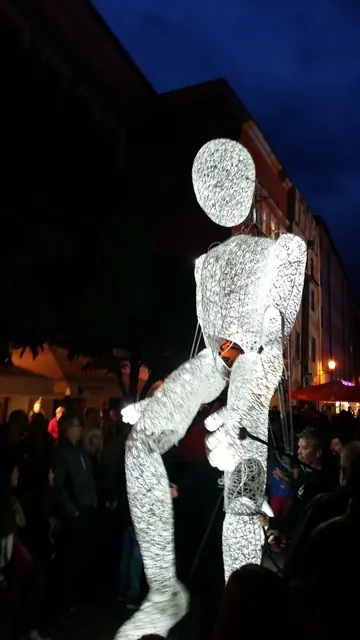
Festival of lights. Humanly conceived, technically illuminated.
How does he write?

As a dentist, I was used to well-trained office staff revising my medical texts. They corrected spelling, smoothed formulations and made complicated sentences readable. Nobody would therefore have credited them with the medical ideas.

Retirement ended not only the practice but also the office. Apparently only a president can take the entire staff into retirement. For linguistic revision I therefore switched to artificial intelligence.

The division of labour remained essentially the same: I provide thoughts, experiences and attitude; AI helps with sentence structure, spelling and polish. The new office assistant simply needs no desk, no holidays and shows a remarkable enthusiasm for syntax.

The birth round of my seal

Thoughts

Breaking wave in the Blue Lagoon
Why does he write?

The author has a pronounced curiosity and a tendency to follow thoughts long after others have changed the subject. Not everyone wants to discuss society, technology, philosophy or life’s absurdities over coffee. That is probably sensible.

In writing, every thought finds the space it needs, and every reader can decide how far to follow it.

Thoughts