English draft: prepared for later fine editing. Humanity has survived worse than a provisional translation.

Thought path · House and origin

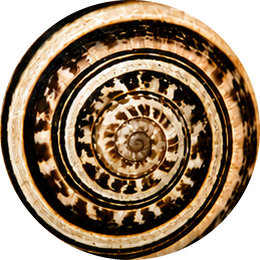
Why does the snail take its house with it?

The snail takes its house with it because otherwise it would no longer be a snail. That sounds banal, but the whole thought is hiding right there. One does not have to amputate what is one’s own in order to begin something new.

A house can be protection. Memory. Boundary. Form. Sometimes also a burden. But it is not automatically a prison merely because it seems narrow.

The decisive question is not whether one carries a house. The decisive question is whether one stops inside it.

Freedom does not always begin with throwing things away. Sometimes it begins with taking one’s own along and still changing direction.

The snail shows another kind of departure. No dramatic break, no naked new beginning, no grand promise. Only movement with origin.

A person, too, can move on like this: with experience, caution, old traces, scars, beauty and doubt. Not all of it has to go. Much of it may come along.

The Ark does not preserve the arbitrary. It preserves what should remain.

The harbour of the Ark is yourself.
To the thoughts overview

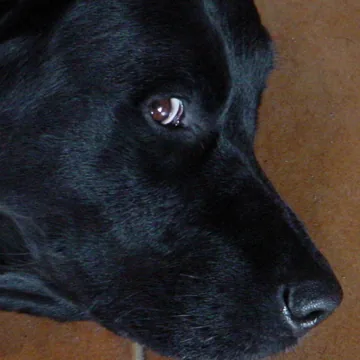
Black dog with a thoughtful look
Who is thinking behind it?

ArcaNuova is not a finished product, but an ark for thoughts that can be taken along, grasped, understood and reused. What stands here should not merely be read. It should trigger something: an impulse, a tool, a beginning.

Behind ArcaNuova are experience, observation and the attempt to think about things clearly and practically. No psychological fog. No empty chatter. Something you can actually get hold of.

Thoughts

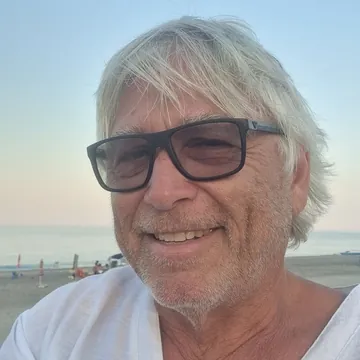
The author of ArcaNuova by the sea
Who writes behind it?

His path led from dental technician to dentist and from dentist to philosopher. He carried forward fewer titles than tools: precise observation, careful case history, diagnosis and the willingness to discard an initial assumption when reality does not fit it.

The thoughts do not come from a textbook, but from experience: in a dental practice, a solar installation, a router, an olive harvest or occasionally in the gaze of a dog.

More about the author

Thoughts

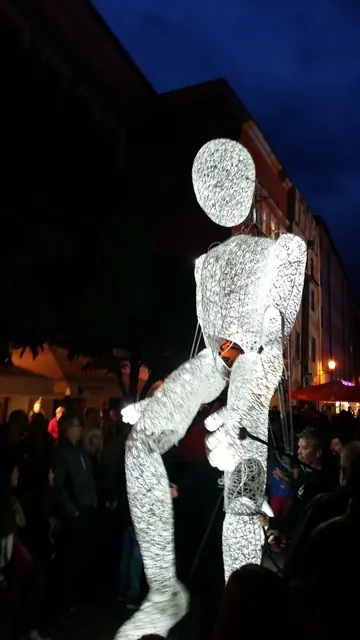
Festival of lights. Humanly conceived, technically illuminated.
How does he write?

As a dentist, I was used to well-trained office staff revising my medical texts. They corrected spelling, smoothed formulations and made complicated sentences readable. Nobody would therefore have credited them with the medical ideas.

Retirement ended not only the practice but also the office. Apparently only a president can take the entire staff into retirement. For linguistic revision I therefore switched to artificial intelligence.

The division of labour remained essentially the same: I provide thoughts, experiences and attitude; AI helps with sentence structure, spelling and polish. The new office assistant simply needs no desk, no holidays and shows a remarkable enthusiasm for syntax.

The birth round of my seal

Thoughts

Breaking wave in the Blue Lagoon
Why does he write?

The author has a pronounced curiosity and a tendency to follow thoughts long after others have changed the subject. Not everyone wants to discuss society, technology, philosophy or life’s absurdities over coffee. That is probably sensible.

In writing, every thought finds the space it needs, and every reader can decide how far to follow it.

Thoughts