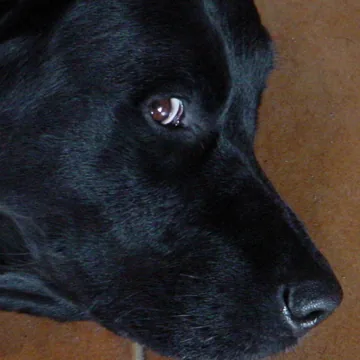
What made Max special
1. The day he found our son
In Munich’s English Garden, our three-year-old son suddenly ran off. People everywhere, many paths, no orientation. Max had never followed a trail and had never been trained as a tracking dog. Yet when he smelled the boy’s shirt, he raised his head, understood the task and set off. Not wandering, but purposeful. He found the child without hesitation or training, simply because responsibility seemed natural to him.
2. The dog at the steering wheel
One afternoon Max began urging us from the living room. Not nervously, but with the particular seriousness he showed when something was wrong. He led us through the garden to the door. Outside, a dog was in distress. A man had tied it to the steering wheel; it had jumped out of the car and was choking in the leash. Max had noticed the emergency from more than fifty metres away and led us directly to it. He had recognised danger before a human could even see it.
3. The dog behind the fence
A village dog hurled itself aggressively at the fence whenever we passed. Max watched the pattern several times, remembered it, and one day positioned himself so precisely that the other dog jumped into empty space and struck the iron bars. Max withdrew his muzzle in a fraction of a second, planned rather than provoked. Afterwards he silently urinated on the astonished dog. No triumph, no theatre. A simple, precise answer.
4. The cat and the two dogs
A cat often entered the property and always escaped through the same hole in the fence. The younger dog chased it barking. Max did something else. He analysed the escape route, took position and intercepted the cat at the exact moment it slipped through. He was not merely a hunter; he was a strategist. When I said “Leave it”, he released immediately. Control without cruelty.
5. The two Rottweilers
A man with two aggressive Rottweilers approached us in a park. Max tore himself loose, not to flee, but to draw the strange dogs away from us. He absorbed and redirected the danger. No frontal fight. Ten minutes later he returned, having shaken them off. Not defiance, but a clear tactical decision.
6. The bathtub scene
Max was a water dog. At a lake he circled above me whenever I stayed under water too long. That was instinct. No one expected the same reaction in a bathtub. I held my breath for ten, twenty, thirty seconds. Nothing happened. At around fifty seconds Max jumped fully into the bath, convinced I had been gone too long and needed help. No panic, no chaos, only a dog taking responsibility in a location wholly unsuited to it.
7. His last hours
When Max suffered a stroke, he was weak and could no longer walk, yet he still understood that he was not alone. The other dogs, including the small ones, lay around him. They did not eat before he ate. They stayed with him until the end. His last meal was a fillet prepared for him alone. The others did not touch it. That was not training. It was the honour of the pack. He left with dignity, accompanied rather than alone.
What remains
Max was not merely a pet. He was a personality, a teacher, a dog who did not simply obey but understood. These stories remain because they show how deeply an animal can shape a human life, and how much wisdom can live in a dog when someone truly sees him.